
How Evaporative Cooling Becomes a Deadly Hazard in High Altitudes
And how you can protect yourself against evaporative-cooling-induced hypothermia.
WHY EVAPORATIVE COOLING IN HIGH ALTITUDES CAN LEAD TO ACUTE HYPOTHERMIA
The human body is capable of amazing feats. It is one of the few organisms in the world capable of sweating and thus regulating its body temperature.
When we sweat, our body releases water that evaporates on the skin. To transition into a gaseous state, the bonds between water molecules must be broken by thermal energy. In the process, heat is drawn from the surroundings—our skin and the air around us. This creates evaporative cooling, which cools us down during high temperatures and intense physical activity and prevents overheating.
However, this mechanism—as ingenious as it is vital for survival—quickly becomes a deadly danger in the high mountains.
LOWER ATMOSPHERIC PRESSURE WITH EVERY METRE OF ALTITUDE
This is because with every metre of altitude, not only does the temperature drop, but air pressure also decreases—by approximately 1 hPa per 8 metres of altitude. The air becomes thinner. Two primary reasons explain this: First, Earth’s gravity pulls most air particles downward, concentrating them near the ground. Second, at high altitudes, there is less air above you whose weight can press downward.
The result: At high altitudes, there are fewer air particles in each litre of air than at sea level. That’s why breathing is more difficult in the high mountains. With every breath you take, fewer oxygen molecules are available to you.
But there’s another effect at play: water turns into a gas more quickly. For example, at 4,000 metres above sea level, the boiling point is 87 °C; at 6,000 metres above sea level, it’s already down to 80 °C; and at the summit of Mount Everest, at 8,850 metres above sea level, it’s as low as 71 °C. In other words: Water requires less energy to turn into a gas. This is because lower air pressure and lower air density mean fewer air molecules press down on water molecules, which would otherwise hold back rising water molecules. As a result, it can turn into a gas more easily.
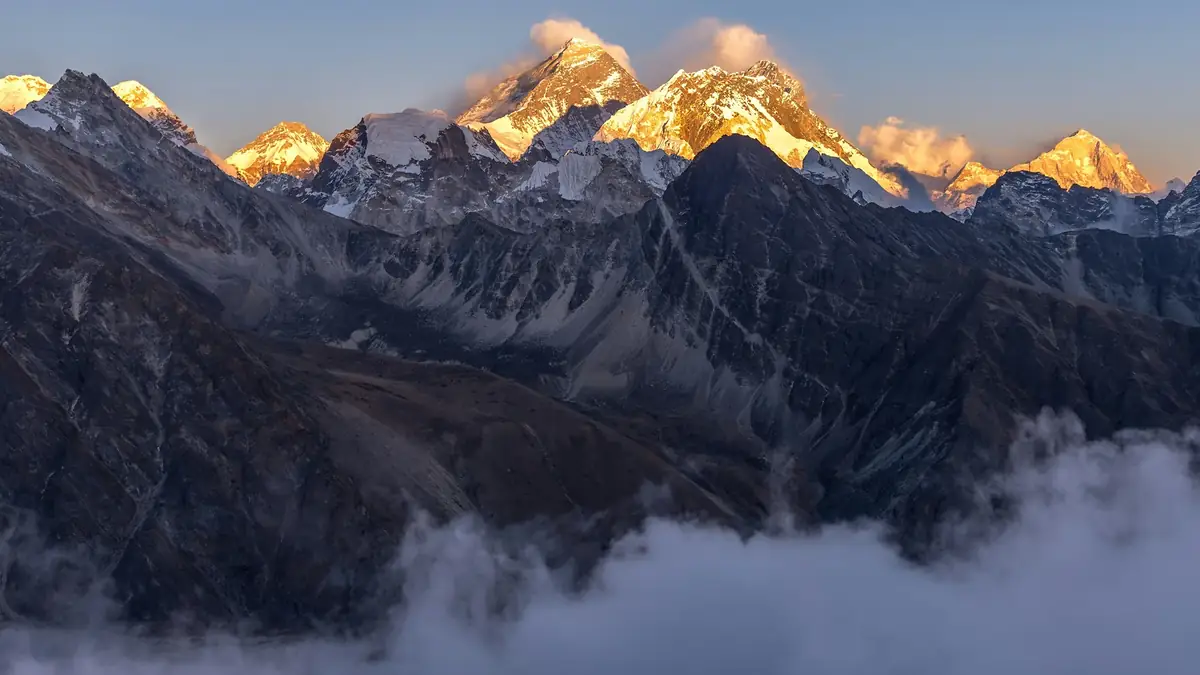
Mount Everest – 8848.86 Metres above sea level

HOW EVAPORATIVE COOLING CAN CHILL YOU DOWN IN MINUTES
But this by no means means you’ll feel less cold because evaporation requires less energy. The opposite is true: In high mountains above 2,500 metres, a dangerous effect can chill you in the blink of an eye. This is because the moisture from soaked clothing evaporates much faster at those altitudes, releasing a dangerously large amount of cold in a short time. Your body’s natural “air conditioning” system, so to speak, overreacts. Instead of slightly cooling you during physical activity, the moisture your body releases now puts you at risk of acute hypothermia.
YOU OFTEN HAVE ONLY A FEW MINUTES
Due to rapid evaporation and the significant amount of heat lost in the process, life-threatening hypothermia can set in even in summer at very mild temperatures between 10–15 °C at elevations of 4,000–6,000 metres above sea level after less than 30 minutes in wet clothing; after two hours at the latest, there is virtually no chance of rescuing you alive. Since temperatures at high altitudes are often near or well below freezing, your chances of survival drop dramatically: With sweat-soaked clothing that has lost its insulating properties, you often have only 5–15 minutes at most before your body temperature drops to a life-threatening level; death from exposure often occurs in less than an hour—too short a time for rescue teams to reach you, even in good weather.
HIGH-ALTITUDE WINDS AND DRY AIR EXACERBATE HEAT LOSS
Heat loss is exacerbated by other high-mountain weather conditions, particularly the strong high-altitude winds that blow year-round—regularly exceeding 75 km/h at summits—and extremely dry air with humidity often as low as 20%–30% (compared to Germany’s annual average of 75%–80%). The dry air draws a dangerously high amount of moisture from your body and promotes (excessively) rapid evaporation; strong winds strip your body of the warm air surrounding it. Both phenomena cause you to cool down even faster.
HOW TO PROTECT YOURSELF FROM HEAT LOSS DUE TO EVAPORATIVE COOLING AND HYPOTHERMIA
Conditions in the high mountains require you to choose your clothing carefully and adapt it to the extreme weather conditions in high-alpine terrain. Especially at extreme altitudes of 4,000 metres and higher, you should therefore always have a warm down jacket with a waterproof outer shell in your pack—regardless of the season—to reliably keep you warm in temperatures well below freezing.
However, proper clothing starts with the right base and mid layers. While synthetic base and mid layers are usually just a comfort issue in the European Alps, they can quickly become a deadly hazard at altitudes of 4,000 metres above sea level and higher. Even a thin merino wool base or mid layer reaches its limits at such altitudes. This is because neither material can sufficiently compensate for the enormous heat loss caused by the high evaporative cooling at high altitudes.
That’s why you need a material designed to minimize evaporative cooling in high-alpine conditions: yak wool.
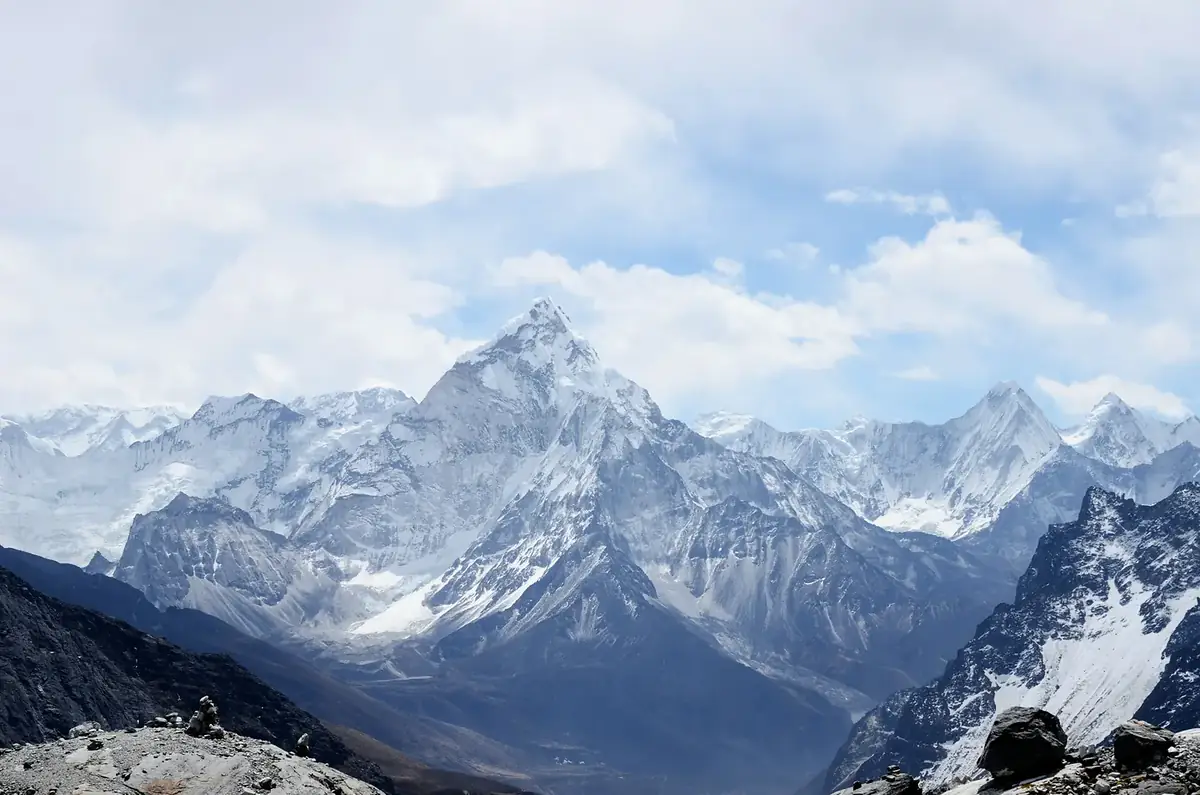
Into thin air
HOW THE BREATHABILITY OF YAK WOOL PREVENTS CHILLING DUE TO EVAPORATIVE COOLING
Its key advantage is its high breathability. Yak wool is the most breathable wool in the world and up to 66% more breathable than merino wool. It protects you from hypothermia caused by evaporative cooling in high mountains better than any other material—not in spite of, but precisely because of—this high breathability.
Yak wool minimizes evaporative cooling by immediately wicking moisture away from the body. Yak wool does this better than any other type of wool. As a result, evaporative cooling occurs on the outer layer of the wool rather than directly on the skin, where the inner yak fibers insulate and mitigate it. This mechanism limits heat loss caused by evaporative cooling more effectively than any other material, reliably protecting you from getting chilled after physically demanding ascents.
WHY OUR BASE AND MID LAYERS ARE THE BEST CHOICE FOR REDUCING HEAT LOSS DUE TO EVAPORATIVE COOLING IN THE HIGH MOUNTAINS
Our performance apparel is the only outdoor clothing in the world made entirely from yak wool. While our competitors use merino wool or synthetic fibers—which do not provide sufficient protection against evaporative cooling at extreme altitudes—our performance apparel, made of pure yak wool, is designed for high-altitude environments and protects you even under the most adverse conditions. Even compared to a merino-yak blend, our functional clothing made of 100% untreated yak wool offers significantly more effective protection against life-threatening hypothermia.
The Power of the Himalaya

We also use a heavier knit for our performance clothing (which, thanks to its higher breathability, regulates moisture just as effectively).
This helps protect against hypothermia for three reasons: First, a heavier fabric can absorb more moisture before it becomes completely saturated and loses its insulating power.
Furthermore, our heavier knit forms an extra-thick barrier against evaporative cooling. When our base and mid layers wick moisture outward, more fine air pockets form between the source of evaporative cooling and your body, insulating against the cold and protecting you from hypothermia.
Finally, unlike merino wool or polyamide fibers, yak hair fibers are hollow on the inside and provide up to 40% better insulation against the cold than merino wool. The barrier between where evaporative cooling occurs and your body is therefore not only extra thick but also particularly effective.
These properties make our yak base and mid layers, beanies, and scarves the best companions in high-alpine terrain, reliably protecting you from hypothermia caused by evaporative cooling even at altitudes over 6,000 metres above sea level.

