
How to Dress Properly in the Mountains
So you'll be ready for your next adventure.
The perfect mountain outfit follows the “onion principle”: different layers, each with its own function, that you can add or remove as needed to adapt to changing weather and shifts in how you perceive temperature based on your exertion level.
1. THE RIGHT UNDERGARMENTS
The right mountain clothing starts with the right undergarments. They wick moisture and excess heat away from your body, prevent chafing and pressure points on your feet and between your legs, and protect you from unpleasant odors. Our Men’s Boxer Shorts, Women’s Boyshorts and Bras are ideal for this. Made of 100% yak wool, they’re super soft, wick moisture away quickly, and prevent skin friction.
Our 100% yak wool socks are midweight, keep your feet comfortably dry, and reduce the risk of blisters. For winter, we recommend our super-warm, heavyweight socks made of pure yak wool , which keep your feet comfortably warm even on the coldest days.
2. BASE LAYER
The base layer is the foundation of any successful mountaineering outfit. You can’t do without it. It should regulate your body temperature, protect against the cold, wick away moisture and excess heat, reduce friction against the skin, and protect you from UV radiation and unpleasant odors.
Our Yak Wool T-Shirt is ideal for this, delivering uncompromising year-round performance by efficiently regulating your body temperature and wicking away sweat. It keeps you warm in cooler temperatures and comfortably cool in the summer.
In winter, our Yak Wool Long-Sleeve with a Half-Zip is a warmer option, featuring hand loops and a warm stand-up collar to provide the warmth you need on the coldest winter days and during ski tours, without overheating during physical activity. If you prefer a crew neck, our Long Sleeve is the right choice.
For easier hikes at lower elevations or in the low mountain ranges, we recommend our Camel Wool T-Shirt for summer and our Camel Wool Long Sleeve for cold fall days.
On the coldest winter days, you can also pair your base layer with long pants for insulation on your legs—for example, our Long Johns made of 100% yak- or camel wool.
3. MID LAYER
The mid layer is the second layer in the layering system. It serves as the insulating layer between the functional base layer and a weatherproof outer layer, and is worn over the base layer.
The mid layer provides protection against the cold and insulation. A good mid layer keeps you warm and retains your body heat without causing you to overheat. It must also be able to wick moisture absorbed by the base layer away to the outside.
Choosing the right mid layer depends on the temperature and intended use. For warmer but variable temperatures between 59 and 77 °F, we recommend a lightweight mid layer that isn’t heavier than your base layer.
Our long-sleeve tops made of 100% yak and camel wool are ideal for this. Our Yak Wool Long Sleeve yak wool long-sleeve top delivers maximum performance in high mountains and keeps you warm even when the weather turns. Our lightweight camel wool long-sleeve top is ideal for fall and for cool summer mornings in lower-altitude regions, and is also easy to pack for summer trips.
For fall and winter mountain hikes, we recommend our Midweight Cardigan made of 100% yak wool. It reliably keeps you warm under a technical jacket, even in freezing temperatures, without overheating. At the same time, it’s breathable enough to wear as an outer layer during strenuous activities or on cooler fall days.
If you’d prefer something a little less warm, we recommend our Midweight Cardigan made of 100% camel wool , which is ideal for milder fall days when the sun and clouds take turns.


If you prefer a sweater, our Midweight Half-Zip Sweaters made of 100% yak- or camel wool are ideal.
For summer and fall, our Sleeveless Vests made of 100% yak- or camel wool are also excellent for particularly strenuous activities on warmer but changeable days. Their midweight fabric reliably keeps you warm, while allowing excess body heat to escape through the arms during physical activity. They’re therefore ideal for mountaineering in early fall and for Nordic walking.
Finally, for the most extreme sub-zero temperatures, our Heavyweight Cardigan made of 100% yak wool is the right choice. It reliably keeps you warm as a mid layer under an outer jacket (which may have additional insulation) at temperatures well below freezing. However, for milder temperatures or during strenuous physical activity, this cardigan is often too warm. It works very well as a warm outer layer by the campfire, during longer breaks while ski touring, or when staying at ski and mountain huts—serving as a super-warm insulating layer and a replacement for a down jacket.
Thanks to the yak fibers used, all our mid layers are extremely breathable and temperature-regulating. Unlike down jackets, they trap less heat and keep you warm without overheating during sweaty activities. This ensures optimal performance in every situation.
4. THE OUTER LAYER
The outermost layer in a layering system is the weather-protection layer, which shields you from the elements. It reliably keeps wind and precipitation away from you. Depending on the activity, this could be a waterproof hardshell, a water-repellent, more breathable softshell, or a down jacket with water- and wind-repellent outer fabric.
Since the yak hair in our functional clothing evolved in high-altitude mountain environments, it copes remarkably well with strong winds, fog, moisture, and light drizzle. With our yak wool as a mid layer, you can therefore forgo a weather layer in many situations and use our mid layers—such as our cardigan in midweight or heavyweight weight made of 100% yak wool—as your outer jacket.
Because our wool is more breathable than most hard- and softshell jackets and regulates your body temperature better, you’ll enjoy enhanced performance and comfort—all while helping to protect the environment. Most rain jackets and softshells are made of synthetic materials and treated with harmful, long-lasting chemicals to achieve water-repellent properties.
So it’s better to use our mid layers as your outer layer and leave the rain jacket in your backpack unless you absolutely need it.
5. Hats, Scarves & Accessories
You don’t just lose heat through your upper body. On the contrary: heat loss is particularly significant around the head and neck. These areas are also especially exposed, and in the neck area in particular, hypothermia can quickly lead to a cold, since mucous membranes with poor blood circulation are less effective at fighting off bacteria and pathogens.
Hats and scarves fall into two categories: a heavyweight style for cold winter days and a lightweight style that can be worn year-round in cooler temperatures.
Our collection covers both uses. We recommend wearing our lightweight beanies and tube scarves year-round as soon as temperatures drop below 59 °F—and especially when wind and precipitation are also present. Our Lightweight Beanies and Tube Scarves , made of 100% yak wool, reliably protect you from hypothermia in the high mountains during milder temperatures and heavy sweating, without overheating. Our Lightweight Beanies lightweight camel wool beanies and tube scarves are perfect for cooler summer days. Our Lite Beanies are designed to be worn even under a helmet.
Our Heavyweight Beanies and Tube Scarves, made of 100% yak wool, are the perfect companions for the coldest days on the mountain.
For military use, we also offer balaclavas with the same functionality as our hats and scarves. They keep your face comfortably warm even in icy winds and at the lowest temperatures.
6. IN YOUR BACKPACK: ALWAYS CARRY AN EXTRA, WARM INSULATED JACKET
It’s one of the mistakes we see very often in the mountains, and—along with boundless overconfidence and improper footwear—one of the main causes of preventable rescue operations: hypothermia from wearing the wrong clothing, especially during the seemingly warm summer months.
This is because many people underestimate how quickly the weather can change. Even in the Alps, temperatures can drop abruptly by 27 to over 36 °F after or during a thunderstorm. This drastic drop occurs especially often when a thunderstorm is accompanied by a cold front. Within a very short time—often in less than an hour—even in the height of summer, temperatures can drop from summer heat to around freezing, causing sudden snowfall in the high mountains. Even if it doesn’t snow—at temperatures as high as 50–59 °F and with moderate winds—wearing the wrong clothing can lead to life-threatening hypothermia within a few hours, especially if you’re wearing only a light T-shirt and a thin jacket that got wet during the thunderstorm.
No matter how summery the temperatures may be when you set out on your hike, a warm jacket in your backpack is a must.
In the summer, we recommend our Midweight Cardigan or Sweater made of 100% yak wool for this purpose. It will keep you reliably warm during unexpected weather changes and at temperatures between 41 and 59 °F.
In the fall and spring—when sunshine and pleasant 59 °F temperatures in the high mountains can quickly give way to sub-freezing conditions—and in winter, we recommend packing our Heavyweight Cardigan made of 100% yak wool in your backpack. As our warmest insulating layer, it will keep you reliably warm even at temperatures well below freezing, especially when paired with a windproof hardshell jacket.
Because even wool loses most of its insulating properties when completely soaked, we recommend that, in the event of a thunderstorm, you leave your warm backup jacket in your waterproof backpack at first and only put it on once the rain has let up or you’ve found a covered shelter. You should remove any potentially soaked base layers beforehand. Yak wool quickly wicks away any remaining moisture and rapidly warms your body again through the heat released during adsorption and by effectively retaining your body heat.
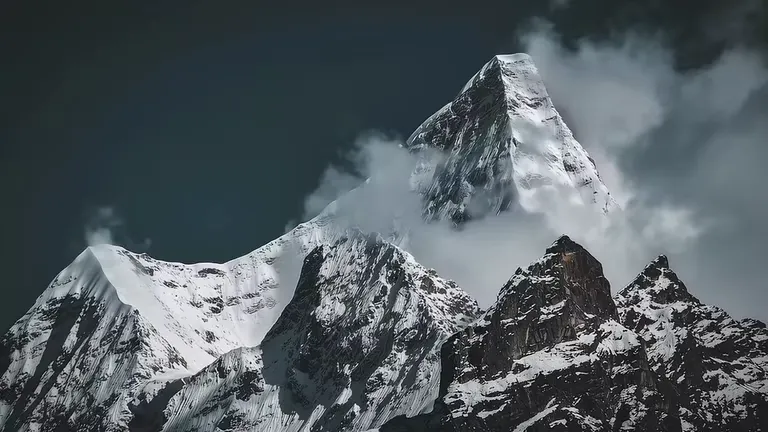
Mount Everest – 29,031.7 Feet above sea level

7. IN YOUR BACKPACK: EMERGENCY BLANKET/SURVIVAL BLANKET
Here’s another recommendation from us that could mean the difference between life and death in an emergency: Always carry a rescue blanket or survival blanket in your backpack. A simple rescue blanket often costs just a few euros, but in an emergency it can reflect up to 99% of your body heat, helping minimize heat loss.
A rescue blanket is particularly effective when it has an insulating layer of air pockets—a function our Yakcardigans fulfill exceptionally well thanks to their fine wool fibers, which contain millions of tiny air pockets.
In high-altitude mountain regions, we strongly recommend going one step further and carrying a Blizzard Survival Blanket from Blizzard Protection Systems instead of a conventional emergency blanket—such as the Blizzard Reflexcell Survival Blanket. Developed specifically for the military and special forces, this survival blanket features a reflective metal layer and air insulation that reliably protects you from hypothermia in an emergency—even in the most extreme temperatures—making it a life-saving companion.


